The Life of Georges Buffon
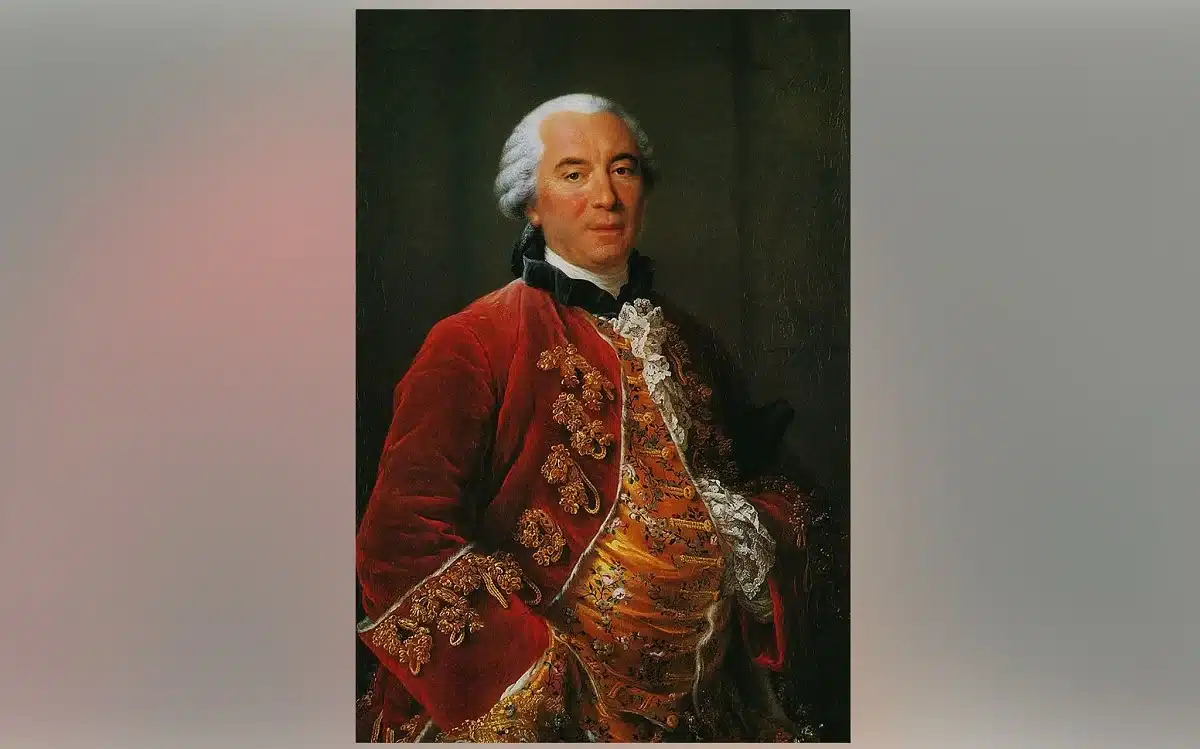
Georges-Louis Leclerc, later known as Comte de Buffon, was born in 1707 in Montbard, France. The son of a state official, Buffon was raised in a wealthy family and demonstrated a strong interest in science from an early age. He began his education at a Jesuit college and then went on to study law at the University of Angers. However, his passion lay more in mathematics and science, and he began to educate himself in these fields.
This transformation during his early life was crucial for Buffon’s future career. His interest in botany, mathematics, and astronomy guided him to carve his own path in the natural sciences. His early education instilled in him the disciplined and analytical thinking skills necessary for scientific inquiry.
The Beginning of His Scientific Career
After his education, Buffon began his scientific work in the 1730s and quickly proved himself in this field. In 1739, when he was only 32 years old, he became a member of the French Academy of Sciences, France’s most prestigious scientific institution. During this period, Buffon was appointed administrator of the Jardin du Roi (King’s Garden), a position that provided him with ample scope for research.
While in this position, Buffon had the opportunity to conduct extensive studies on natural history, which formed the basis of his most famous work, “Natural History”. “Natural History” was a 36-volume work containing detailed studies of animals, plants, minerals and geology, and brought Buffon international fame.
Main Achievements and Contributions
Buffon’s achievements throughout his scientific career are numerous, but one of the most distinctive is his original ideas on biological and geological matters. In “Natural History”, he examined the history of living things and the world as a whole, and this work became an important milestone in the development of biological and geological sciences.
Additionally, Buffon contributed to the foundations of evolutionary theory with his observations of the change and adaptation of species. These studies were influential in shaping Charles Darwin’s thoughts on the theory of evolution. Buffon also made important contributions to scientific methodology, strengthening the role of observation and experiment in science.
Buffon’s works were influential not only in the world of science but also in the mentality of the Age of Enlightenment in general. His works permanently changed the way we understand and explain the natural world and played an important role in shaping modern science.

Georges Buffon’s Place and Importance in Science
Works on Natural History
Georges Buffon left a deep mark in the world of science with his work “Natural History” (Histoire Naturelle). This comprehensive work covers biology, mineralogy, geology, and paleontology and provides a broad range of information about the natural world. At the time of its publication, it increased interest in natural sciences, enabling the general public and scientists to learn more about nature. With this work, Buffon created a comprehensive encyclopedia on nature by systematically organizing scientific knowledge and observing natural phenomena.
“Natural History” influenced the scientific way of thinking and the methodology of studying nature. This work had a great influence on many later naturalists and thinkers and had a key role in popularizing scientific knowledge. By presenting information to the public in clear and understandable language, Buffon enabled the dissemination of science not only within the academy but also within the general society.
Effects on the Theory of Evolution
Buffon is considered an early pioneer of evolutionary thought. His studies on the change and origin of species led to the development of the theory of biological evolution. His ideas that species could change slowly over time and that this change could depend on environmental factors formed the basis for later evolutionary thought.
Buffon’s theories on evolution inspired scientists such as Charles Darwin and Alfred Russel Wallace. His ideas on natural selection and adaptation of species are among the cornerstones of the theory of biological evolution. In this respect, Buffon is considered an important figure in shaping modern biology.
Buffon’s Legacy and Contributions to Modern Science
Buffon’s legacy can be measured by the continuing influence of his work on modern science. His observations and theories about the natural world continue to shape how scientists study and understand nature. His integrative approach emphasized the importance of interdisciplinary studies by building bridges between various disciplines.
Buffon argued that science is not only a theoretical endeavor, but should also be based on observation and experiment. This approach increased the importance of using empirical methods in science and strengthened the foundations of the scientific method. Today, Buffon’s work is still considered a point of reference in fields such as ecology, biology and environmental sciences, and his multidisciplinary approach can be seen in many areas of modern science.