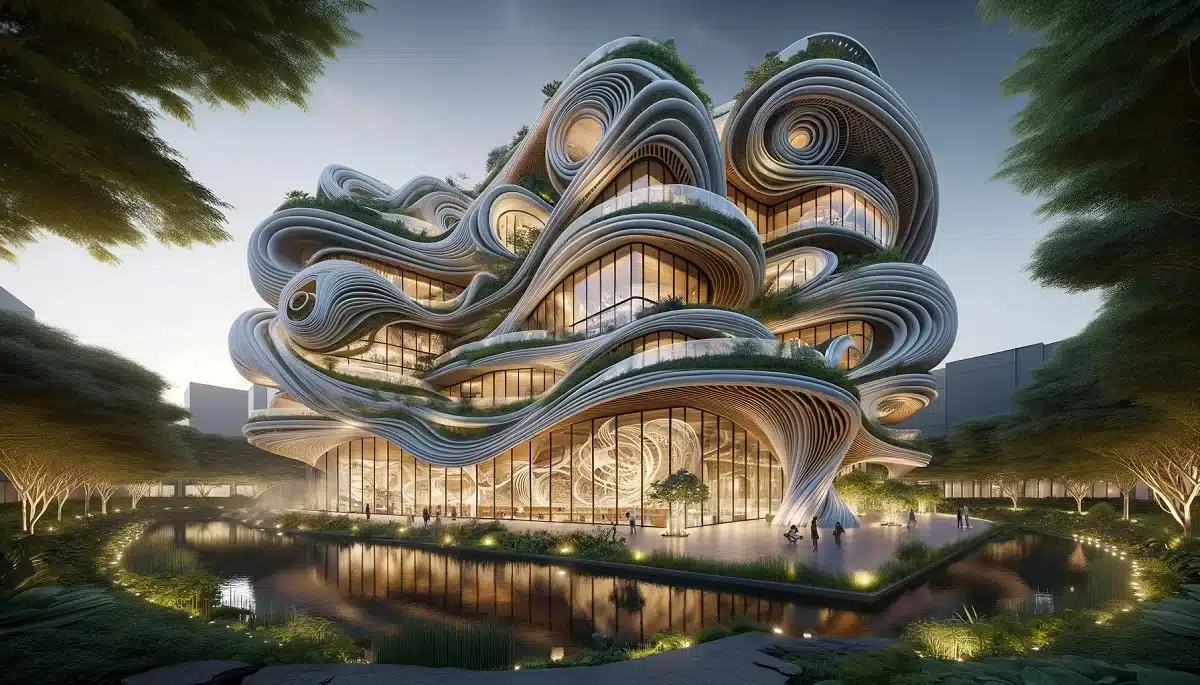
Organic architecture is an architectural approach that emphasizes the harmony and integration between human living spaces and the environment, drawing inspiration from the forms and principles of nature. This approach aims to ensure that buildings are in harmony with the natural environment and encourages the use of organic materials while establishing a balance between aesthetics and functionality. Pioneered by architects like Frank Lloyd Wright, this style advocates for buildings that integrate with the topography, climate, and environmental conditions.
As a reflection of sustainable architectural practices and human-centered design, organic architecture is considered one of the cornerstones of today’s ecological design philosophy. It represents not just an aesthetic choice but also a design philosophy deeply committed to environmental responsibility and principles of livability.

What is Organoid Architecture?
Organoid architecture is an architectural movement inspired by natural forms and processes. This approach applies the aesthetics and functionality of nature to structural designs, providing both visual and functional harmony.
Definition of the Concept of Organoid Architecture
Organoid architecture is a design philosophy that transfers the forms, structures and natural processes of living organisms to architecture. This approach aims to ensure that buildings and other structures are sustainable and compatible with the natural environment. The concept began to become popular in the early 20th century and was especially seen in the works of architects such as Frank Lloyd Wright.

Basic Principles of Organoid Architecture
Fundamental principles of organoid architecture include the integration of natural form and function, the use of local materials, and the maximization of environmental interaction. These principles ensure that structures are inspired by nature, both aesthetically and functionally. Additionally, this architectural movement aims to minimize the ecological footprint by emphasizing sustainability and environmentally friendly designs.
Features of Organoid Architecture
Organoidal architecture has unique design and structural features inspired by the natural world.
Natural Inspirations of Design and Form
One of the most distinctive features of this architectural movement is the designs inspired by the unique forms of nature. For example, leaf, branch or water drop shapes are often used in the design of buildings. In addition to adding an organic feel to the architecture, these forms and shapes also provide improvements in functional aspects such as light, airflow and use of space.
Materials Used and Construction Techniques
Materials used in organoid architecture are generally selected from local, renewable or recyclable resources. These materials give buildings a more integrated and natural appearance with their natural textures and colors. In terms of building techniques, this architectural movement develops methods that promote energy efficiency and natural air conditioning of interior spaces. The construction of structures is planned to reduce environmental impact, which shows that organ-like architecture is a sustainable approach.
Sustainability and Environmental Awareness in Organoid Architecture
Organoidal architecture occupies an important place in the world of architecture by focusing on environmentally friendly approaches and sustainable practices.
Ecological Approaches and Green Buildings
This architectural movement adopts ecological approaches and green building concepts with great care. Buildings are designed and constructed to cause minimal damage to the environment. Green roofs, natural rainwater collection systems and wastewater treatment technologies are indispensable elements of this architectural style. Organoidal architecture also plays an active role in preserving and increasing biodiversity.

Energy Efficiency and Use of Natural Resources
Organoidal architecture is based on energy efficiency and sustainable use of natural resources. Energy consumption is reduced through methods such as natural lighting, passive solar design and natural ventilation. Building materials are selected from renewable or lightly processed natural resources, minimizing carbon footprint and environmental impacts.
Representatives and Works of Organoid Architecture
Many important works in which this architectural movement was adopted and the artists who designed these works made organ-like architecture known worldwide.
Featured Artists and Designers
Architects such as Antoni Gaudí , Frank Lloyd Wright and Zaha Hadid are pioneers of organ-like architecture. These artists integrated natural forms and structures into modern architecture, creating unique structures both functionally and aesthetically.
Iconic Organ-like Architecture Projects
Iconic works of this movement include Gaudí’s Sagrada Familia , Wright’s Fallingwater house, and Hadid’s Heydar Aliyev Center . These structures are examples of how diverse and impressive organ-like architecture can be. Each one displays the architect’s inspiration from nature and the transformation of this inspiration into structural art.
Cultural and Artistic Impact of Organoid Architecture
Organoidal architecture stands out not only as a structural solution but also as a powerful form of cultural and artistic expression.
Innovative Approaches in Architectural Expression
This architectural movement uses architecture as a means of expression, thanks to innovative approaches . Organoidal architecture breaks traditional architectural patterns with its natural forms and organic lines, so buildings function not only as living spaces but also as works of art.
The Relationship Between Art and Architecture
Organoid architecture strengthens the relationship between art and architecture . Buildings carry artistic value with both their aesthetic and functional features, and their interaction with the environment makes them a part of environmental art. This approach makes architecture more than just a technical discipline and offers a deep cultural and aesthetic experience.
Organ-like Approaches in the Architecture of the Future
The rapid development of technology and the need for sustainability play an important role in the future of organoid architecture.
The Role of Technology and New Design Methods
The role of technology triggers the development of new design methods in organoid architecture. Computer-aided design (CAD) and digital manufacturing techniques allow architects to create more complex, efficient and environmentally friendly structures. These tools enable the creation of dynamic and adaptive structures that mimic the complexity and efficiency of nature.
The Future Place and Impact of Organoid Architecture
The future place of organoid architecture will become even more important in the design of cities and living spaces. This approach has a central role in preserving ecological balance and fulfilling environmental responsibilities while improving people’s quality of life. Organoidal architecture, when combined with sustainable and flexible urban planning, has the potential to create healthy and livable environments for future generations.